How much fibre a day should we eat? The recommendation in the UK is for at least 30g of fibre but 96% of adults in the UK do not meet this. Why don’t they do something about it given what we know about the health benefits and conversely, the ill-health consequences?
Is it a case of self-exemption bias? i.e., They mistakenly think they are part of the 4%? Or is it a knowledge gap? i.e., they don’t know about the requirement or what 30g of fibre looks like or even why it’s important?
The average British diet (the baseline)
- Breakfast: 3 Weetabix with milk | ~5.7g fibre
- Lunch: White bread (most people in the UK consume white bread) with ham and cheese | ~2g (based on Hovis soft white medium sliced)
- Snack:
- 1 Apple | ~4.4g
- 2 Digestive biscuits | ~1g (McVitie’s Original)
- Dinner: Pizza (apparently the most commonly eaten dinner according to one survey) | ~3.5g (based on half a Goodfella’s stonebaked thin pepperoni)
🛑 Daily Total: 16.6g of fibre
WOW! That’s so low. Maybe people think if they’ve consumed an apple or some lettuce on a sandwich that’s sufficient? Unfortunately not.
Now let’s look at what 30g actually looks like. Here’s my average daily meal plan.
My average daily diet (the target)
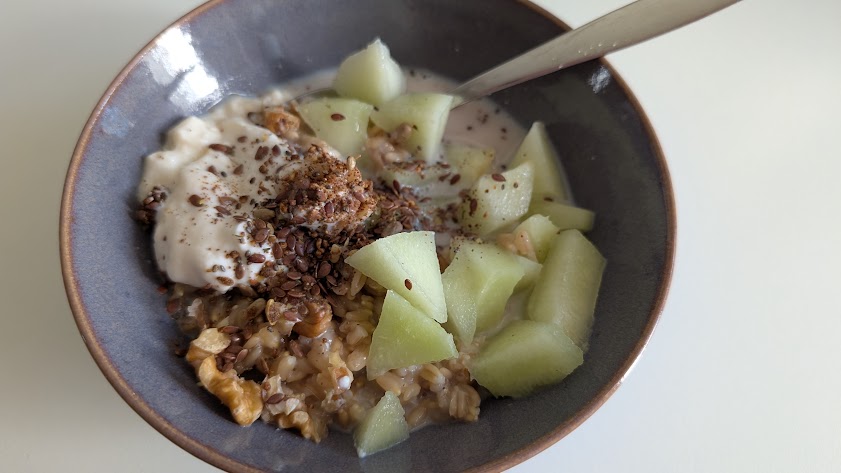
Breakfast: Groats (unprocessed oats) with plain soya Greek yoghurt, plain soya milk, chopped melon, chopped walnuts, and a sprinkling of mixed seeds | ~10g fibre
- Lunch: 4 slices of plain tofu, 4 mushrooms, 2 leaves of kale, a spring onion, and 4 cherry tomatoes fried in olive oil served on one slice of sourdough wholemeal bread | ~7g fibre
- Dinner: Wholemeal spaghetti with red lentil bolognese | ~15g fibre
- Snacks:
- 1 Apple | ~4.4g fibre
- Dark chocolate | ~3.3g fibre
- Half a cup of almonds | ~8.8g fibre
✅ Daily Total: 48.5g of fibre
I’m actually surprised my fibre intake is not higher when I go through this calculation even with my plant-based diet. It really puts it into perspective when a diet like mine is nowhere near that of the evolutionary hunter-gatherer diet which is estimated at 100g or even more of fibre per day. It’s no wonder the average UK diet falls so dangerously short.
Why is fibre important? Less than half of the cells in our bodies are human; the rest are microbial. These microbes function as our own personal pharmacy, fermenting the fibre we eat to produce vital chemical compounds called short-chain fatty acids. Short-chain fatty acids are our heroes. They directly:
- Protect the epithelial lining in the gut against intestinal permeability (often called leaky gut syndrome),
- Send signals to our brain for satiety to support a healthy weight (this is the same pathway that weight loss drugs like Wegovy and Ozempic use),
- Regulate the immune system to prevent allergies, prevent autoimmune diseases, lower inflammation,
- Relax our blood vessels to lower blood pressure,
- Stimulate the production of serotonin which is responsible for regulating our moods.
I wish more people knew all of this. For more see: How Short-Chain Fatty Acids Affect Health and Weight
These microbes need to eat to survive or they will starve and die then no longer produce these beneficial short-chain fatty acids. This is exactly what has happened to the average Westerner – their microbes have been starved of fibre and are no longer doing the work they evolved with us to do. But instead of changing our diets we get drugs from the doctor to deal with the symptoms rather than the cause.
If you think you’re one of the 4% who is meeting the 30g target why don’t you do the calculation I’ve just done? You can ask AI for a quick result then verify it by looking on the back of packets you buy as fibre per 100g is always listed. For fresh food you can find details from McCance and Widdowson’s The Composition of Foods Dataset.
Modern diet advice has it all wrong. Rather than focusing on restriction – i.e., less fat, less sugar, fewer calories etc – we should instead be thinking, how can I get more fibre into this meal?
What are some easy things you can do to fix this today? Swap white bread for wholemeal and white pasta for wholemeal. Eat legumes like beans, chickpeas, lentils and peas every day – this could be as simple as swapping mince in spaghetti bolognese with red lentils. Dip vegetables in hummus as a snack and eat lots of nuts. Sprinkle seeds on your breakfast. Aim for fibre at every meal. Most importantly, think of those little dudes in your intestines who are starving and feed them.


Leave a Reply