The gull we tried to save this week was euthanised by the vet on Tuesday. I haven’t felt like writing about it as I still feel upset. The surgery was never performed and so I refunded everyone who donated to the fundraiser because that money was meant to pay for surgery to fix Piper’s broken leg which didn’t happen. It felt dishonest to take it.
Instead the vet took an x-ray (this vet had not seen the bird before) and found another fracture of her coracoid bone which meant she would be unlikely to fly again so he ended her life.
Are we too quick to euthanise animals with disabilities? We know that humans with disabilities can live long and fulfilling lives. Why is it different for non-human animals?
I follow a couple of sanctuaries for disabled animals on social media. One is Mert’s gull sanctuary in Turkey.
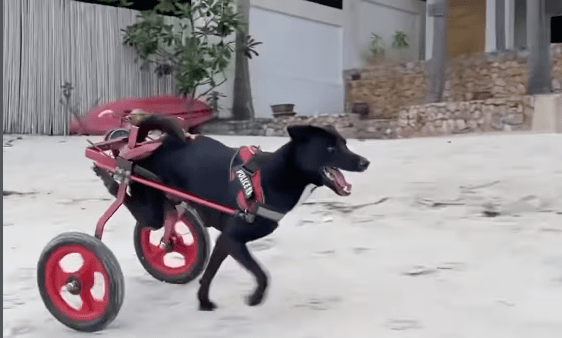
There is also one in Thailand for disabled dogs that you can follow on Instagram. The photo for this post is one of Sybille’s dogs who was shot and left with a broken spine. How can anyone look at that dog’s face and not see joy and a desire to live.
The prevailing attitude in the UK is if it’s decided a wild bird will never fly again they end its life. We are told it is the kindest option and in the animal’s best interest. Is it really? It is certainly the cheapest and easiest option. A disabled animal will require life-long care with appropriate adaptations to support the disability such as ramps or mobility assistance. This is not cheap or easy. But Mert and Sybille’s examples show it can be done. This is not to say that I don’t consider euthanasia appropriate in some cases like where there’s intractable pain. But broken bones heal. It shouldn’t be a death sentence.
Another reason may be people’s attitudes to disability. Until recently we hid disabled humans out of sight in asylums. People found it confrontational and sometimes disturbing to see disability. Some regarded it as the stain of sin from God’s displeasure. In Victorian times they were treated as “freak” shows. There was also fear of contagion. But perhaps worst of all are the “ugly laws” in the United States from the mid-19th to mid-20th centuries that banned people with disabilities from public spaces. Thankfully times have changed but I wonder whether some people still have lingering dated views of disability.
A big part of my job is web accessibility and making our products accessible for everyone. I work with people who have disabilities to better understand what we need to do for accessibility and they don’t view themselves any differently to the rest of us. They don’t feel sorry for themselves or feel they’re missing out or have lower quality of life. They’re just normal humans going about their lives like everyone else.
You could say it’s different for a human who develops a disability later in life as opposed to being born with one as they will have knowledge about what they have lost and what might have been. But this is less likely to apply to non-human animals who live in the present more than we do and who don’t have the same concept of past and future.
A bird that cannot fly can still display natural behaviours such as preening and bathing, foraging, social interaction, and exploration–all of which can be provided by a well-run sanctuary. Flight is not essential. But of course well-run sanctuary requires funding.
We should at least be honest with ourselves when we euthanise an animal due to disability–we are doing it in our best interest, not theirs.
 rachel.blog
Leave a comment